Modern cars are equipped with an array of sophisticated safety features designed to protect you in various driving scenarios. However, many drivers don't fully understand how to use these features effectively.
This comprehensive guide will help you master essential safety technologies, from the basics like seat belts to advanced systems like electronic stability control. You'll learn how each feature works, when to rely on it, and common misconceptions to avoid.
Real Driving Scenarios
Scenario 1: Sudden Stop on a Wet Road

What happens: You're driving at 55 mph when a deer jumps into the road ahead.
Which features activate: ABS (Anti-lock Braking System), Emergency Brake Assist
How to respond: Press firmly on the brake pedal and hold. Don't pump the brakes - let ABS do its job. Steer gently to avoid the obstacle.
Scenario 2: Losing Control on Ice
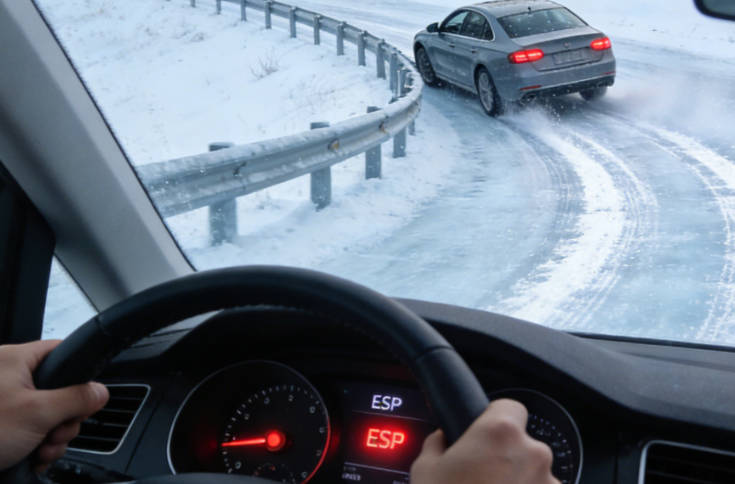
What happens: Your car starts to skid on a patch of black ice.
Which features activate: Traction Control, Electronic Stability Control (ESC)
How to respond: Ease off the accelerator, steer in the direction of the skid, and let ESC help stabilize the vehicle.
Scenario 3: Collision Imminent
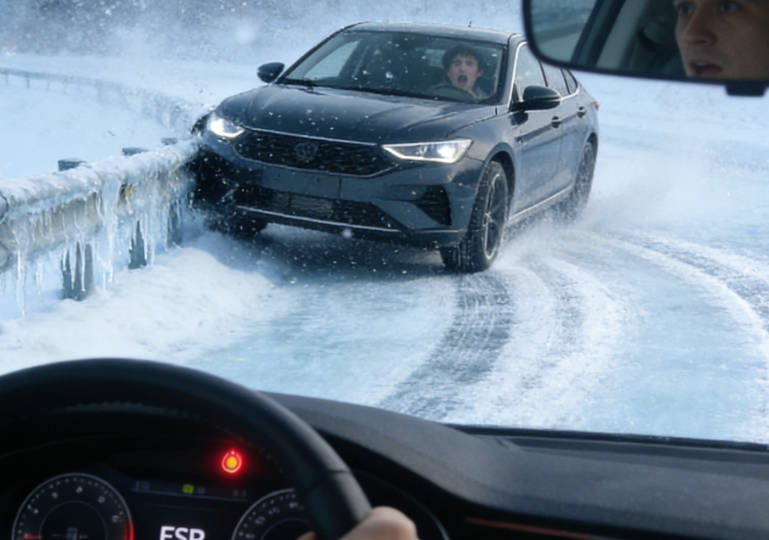
What happens: The car in front of you stops suddenly and you can't avoid a collision.
Which features activate: Forward Collision Warning, Automatic Emergency Braking, Airbags, Seat Belt Pretensioners
How to respond: Brace for impact, keep your hands on the steering wheel at 9 and 3 o'clock, and remain calm.
Essential Safety Features Explained
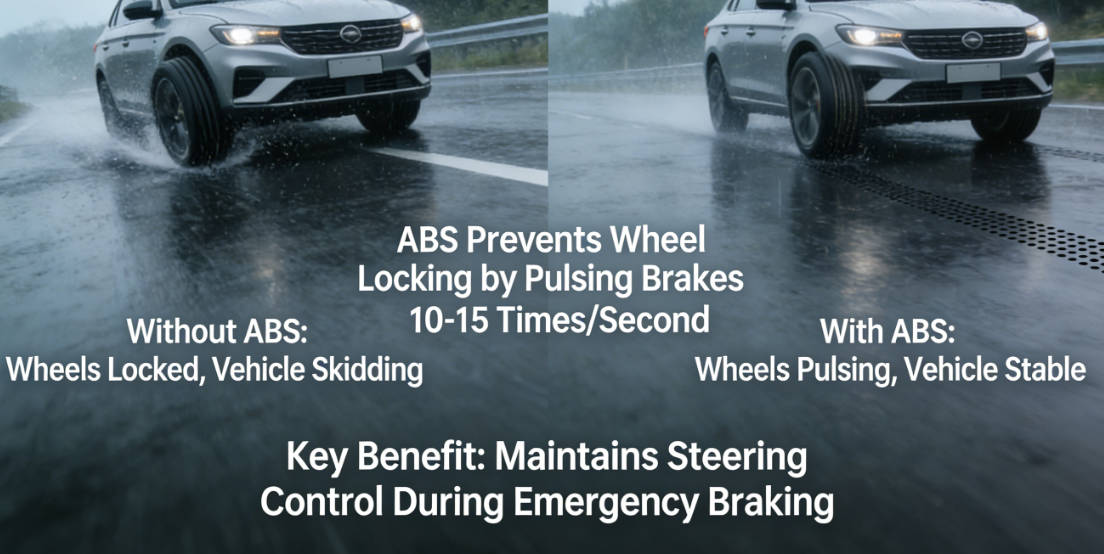
ABS (Anti-lock Braking System)
Prevents wheels from locking during hard braking, allowing you to maintain steering control.
How to use it:
- Press the brake pedal firmly and hold - don't pump
- Steer around obstacles while braking
- You'll feel a pulsing sensation - this is normal
Traction Control
Prevents wheel spin during acceleration on slippery surfaces.
How to use it:
- Accelerate smoothly on slippery roads
- Don't turn it off unless you're stuck in snow/mud
- Let the system modulate power to the wheels
Airbags
Provide additional protection in collisions, working together with seat belts.
How to use them safely:
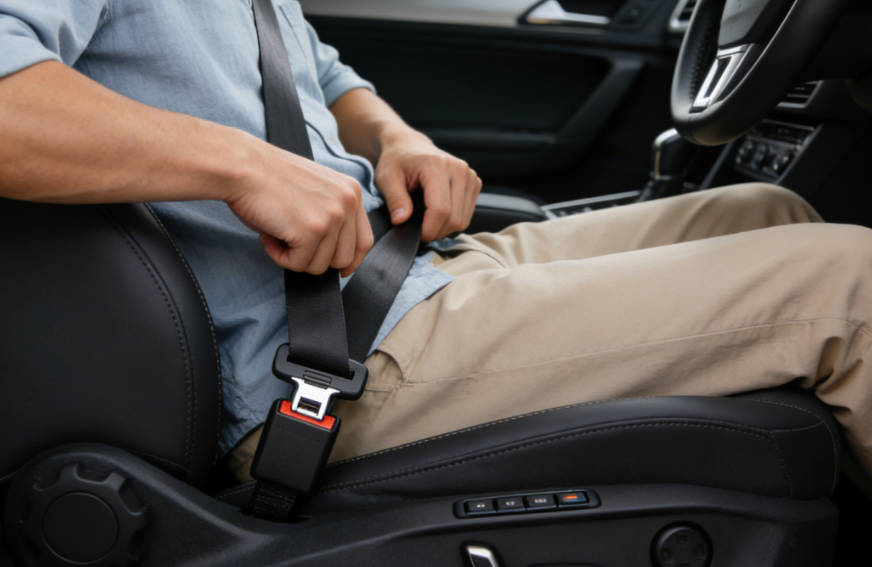
- Always wear your seat belt - airbags are supplements, not replacements
- Sit at least 10 inches away from the steering wheel
- Don't place objects on the dashboard
Electronic Stability Control (ESC)
Helps maintain control during sudden maneuvers or on slippery surfaces.
How it works:
- Monitors steering input and vehicle direction
- Applies brakes to individual wheels to correct oversteer or understeer
- Reduces engine power if necessary
Common Misconceptions
Myth: Safety features make me invincible
Fact: Safety features enhance your protection but don't replace safe driving habits.
Myth: I don't need to wear a seat belt if my car has airbags
Fact: Airbags work best with seat belts - they can even cause injury if you're not properly restrained.
Myth: I should turn off traction control for better performance
Fact: Only turn off traction control in specific situations like getting unstuck from snow/mud.
Safety Feature Checklist
- Adjust mirrors before driving
- Buckle seat belts for all passengers
- Ensure ESC and traction control are enabled
- Check blind spot monitoring system
- Test headlights and taillights regularly
- Understand your car's warning lights
- Know where your airbags are located
- Review your car's owner manual
Final Thoughts
Understanding and properly using your car's safety features can significantly reduce your risk of injury in an accident. Take the time to read your owner's manual and familiarize yourself with each system. Remember, the best safety feature is always a vigilant, focused driver.