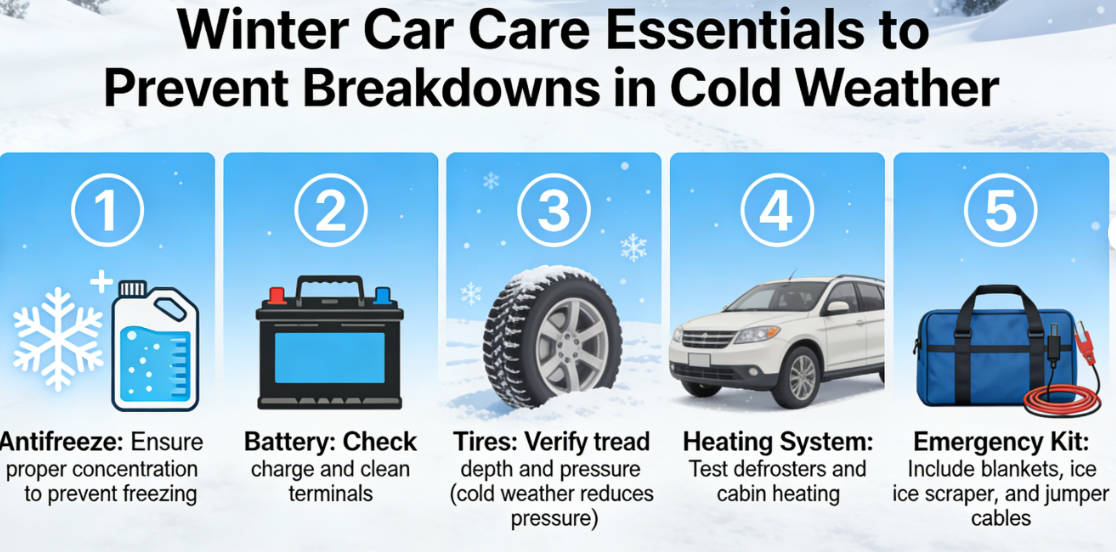
Cold weather can be brutal on your vehicle, increasing the risk of breakdowns and accidents. Proper winter car care is essential to keep your vehicle running smoothly and reliably when temperatures drop. This guide covers the most critical maintenance tasks to prevent winter breakdowns and ensure safe driving in cold conditions.
Timing is Everything: The best time to prepare your car for winter is before the cold weather arrives. Don't wait until the first snowfall or freezing temperatures to start thinking about winter maintenance. Being proactive can save you from unexpected breakdowns when you need your vehicle the most.
Relatable Concerns: Have you ever struggled to start your car on a frigid morning? Or found yourself slipping on icy roads due to worn-out tires? These are common winter car troubles that many drivers face. This guide addresses these common concerns and provides practical solutions to keep you safe and confident on the road this winter.
By following these essential tips, you'll reduce your chances of getting stranded in freezing temperatures and extend the life of your vehicle's components.
Critical Winter Maintenance Areas
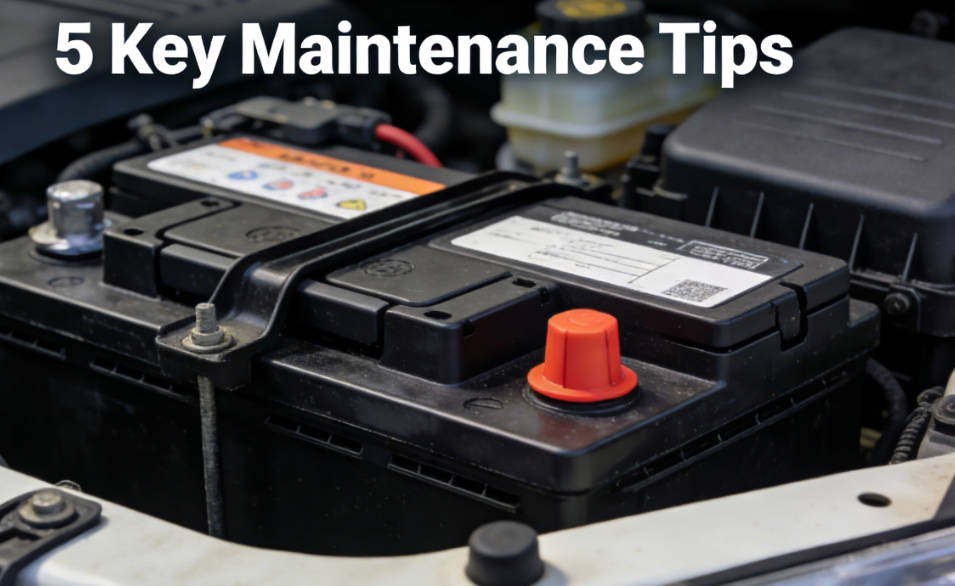
Battery Care
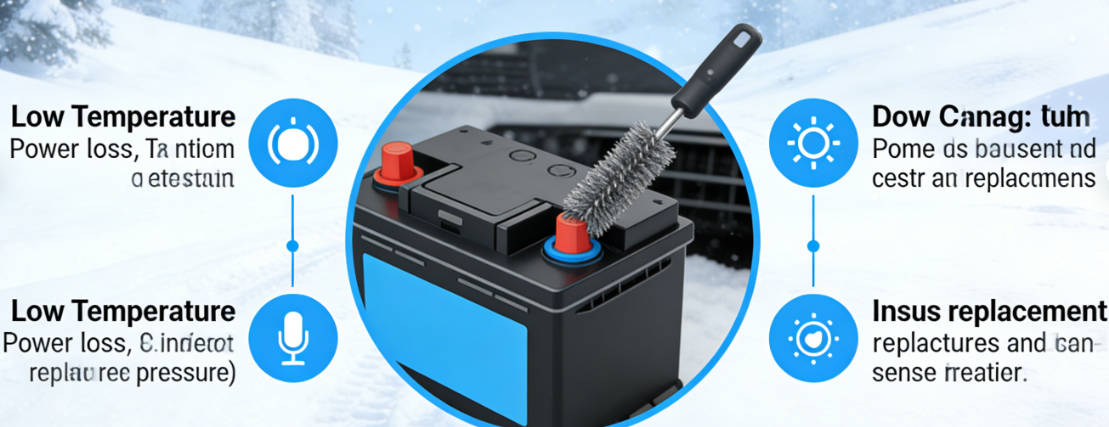
Car batteries lose about 30% of their power at 32°F (0°C) and up to 60% at 0°F (-18°C). Cold weather makes it harder for your battery to start the engine, especially if it's already weak.
What to do:
- Test your battery's voltage - it should be at least 12.6 volts when fully charged
- Clean battery terminals and connections with a wire brush
- Ensure the battery is securely mounted to prevent vibration damage
- Consider replacing batteries older than 3 years before winter
- Invest in a battery blanket for extreme cold climates
Tire Maintenance
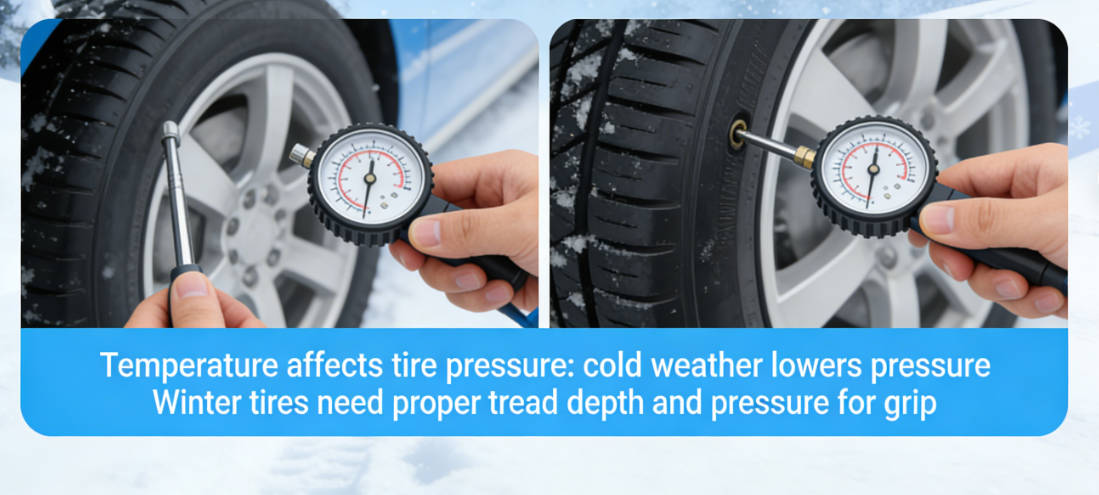
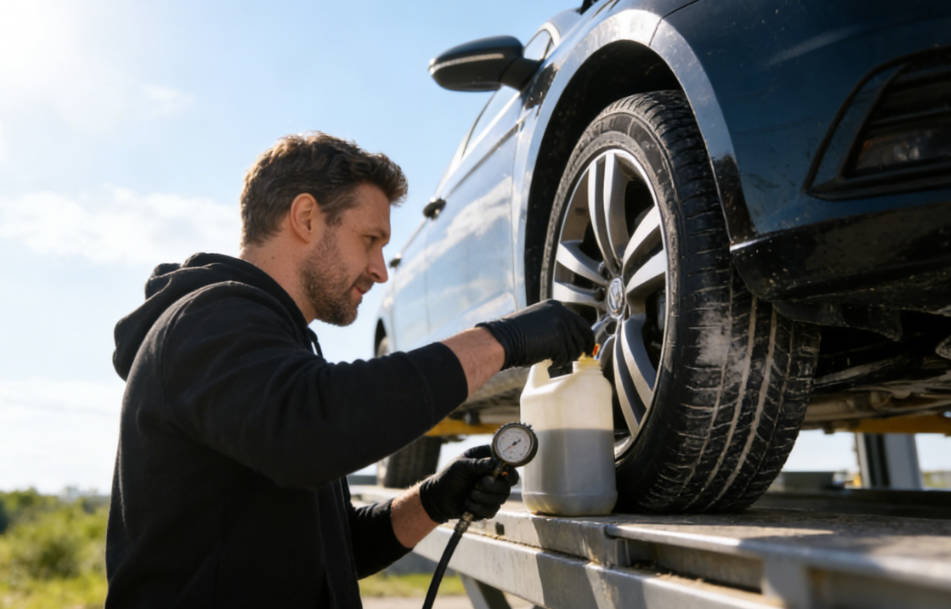
Tires lose pressure in cold weather (about 1 PSI for every 10°F drop). Proper tire pressure is crucial for traction and fuel efficiency.
What to do:
- Check tire pressure weekly when tires are cold
- Maintain the recommended PSI (found on the driver's door jamb)
- Inspect tire tread depth - at least 6/32" is recommended for winter
- Consider winter tires for severe weather conditions
- Rotate tires every 5,000-7,000 miles
Fluid Maintenance
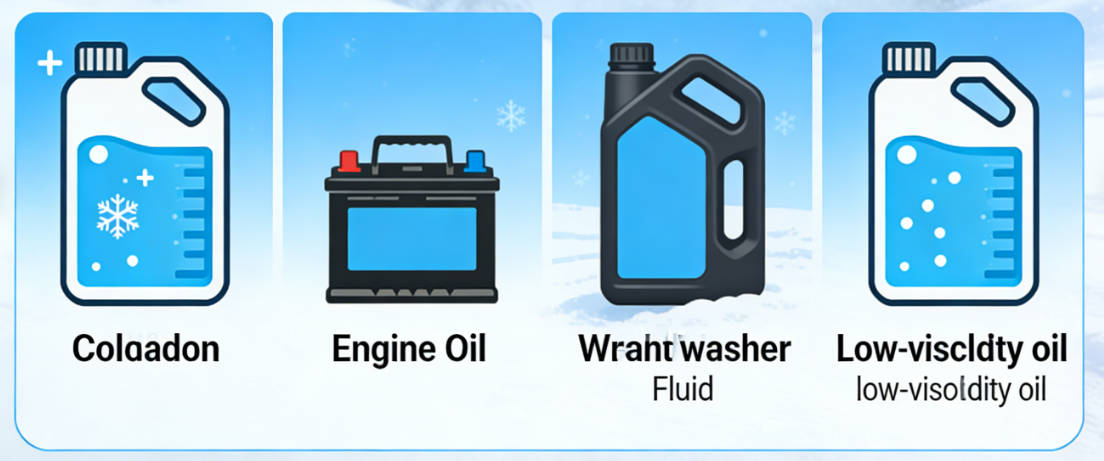
Vehicle fluids are essential for proper operation, and their properties can change in cold weather.
What to do:
- Use winter-grade windshield washer fluid that won't freeze
- Check coolant strength - it should protect to at least -34°F (-37°C)
- Change oil if needed - use lower viscosity oil in cold weather
- Check transmission fluid level and condition
- Ensure power steering fluid is at the proper level
Cooling System
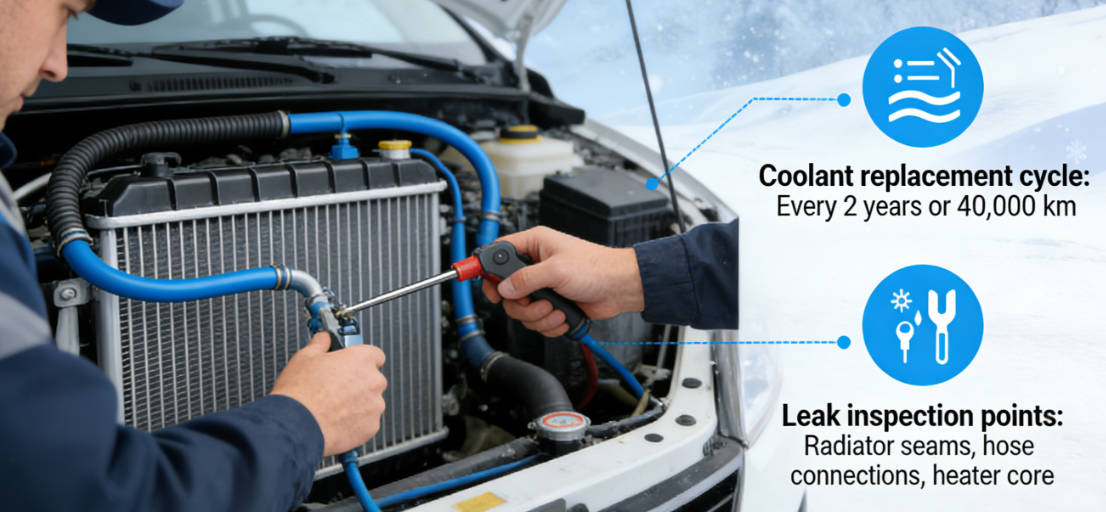
Your cooling system is critical for preventing freezing in cold weather and overheating when the engine warms up.
What to do:
- Flush and refill coolant every 2-3 years
- Check for leaks in hoses, radiator, and water pump
- Ensure the thermostat is working properly
- Inspect heater hoses and core for leaks
- Test the heater to ensure it's working efficiently
Preventive Maintenance Checklist
-
Battery voltage test (12.6V minimum)
-
Clean battery terminals
-
Tire pressure check and adjustment
-
Tire tread inspection (6/32" minimum)
-
Windshield washer fluid top-up with winter blend
-
Coolant strength test
-
Oil change if due
-
Wiper blade inspection and replacement if needed
-
Brake inspection
-
Headlight, taillight, and signal light check
-
Heater and defroster test
-
Emergency kit preparation
Winter Emergency Kit
Even with proper maintenance, breakdowns can still happen in winter. A well-stocked emergency kit can help you stay safe if you get stranded.
Essential Items:
- Flashlight with extra batteries
- Blankets or sleeping bags
- Extra warm clothing and gloves
- First aid kit
- Portable phone charger
- Non-perishable food and water
- Ice scraper and snow brush
Safety Items:
- Jumper cables
- Portable air compressor
- Road flares or reflective triangles
- Shovel
- Sand or kitty litter for traction
- Tool kit
- Cell phone with emergency contacts
Safe Winter Driving Tips
Slow Down
Reduce speed and increase following distance on icy or snowy roads.
Smooth Movements
Avoid sudden braking, acceleration, or steering to prevent skidding.
Visibility
Ensure all windows and mirrors are clear before driving.
Final Thoughts
Proper winter car care is essential for preventing breakdowns and ensuring safe driving in cold weather. By taking the time to perform these critical maintenance tasks before winter arrives, you'll reduce your risk of getting stranded and keep your vehicle running reliably throughout the cold season.
Remember, the best way to prevent winter breakdowns is to be proactive with maintenance. Don't wait until the first snowfall to prepare your vehicle - start early and stay safe on the roads this winter.