What can be stored in a car trunk? Easily overlooked safety hazards and a proper storage checklist

AutoInsight Team January 17, 2026 48 Comments 292 Likes 1.1K Views

Car Trunk Storage: More Than Just Extra Space

Many drivers view their car trunk as a convenient storage space for just about anything, but this casual approach can lead to serious safety hazards.

The question "What can be stored in a car trunk?" has important safety implications. Improper storage can cause accidents, damage your vehicle, or even pose health risks.

In this comprehensive guide, we'll explore what should and shouldn't be stored in your car trunk, easily overlooked safety hazards, and provide a proper storage checklist to keep you and your vehicle safe.

Safety First

An improperly loaded trunk can affect your car's handling, braking, and stability, especially in emergency situations. Always prioritize safety over convenience when storing items in your vehicle.
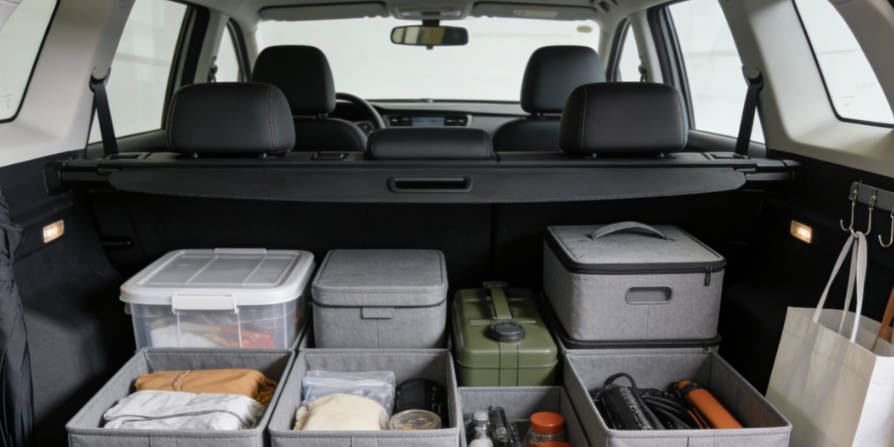
Organized car trunk

What Should NOT Be Stored in Your Car Trunk

Some items are simply too dangerous to keep in your car trunk, regardless of how convenient it might seem. Here's what to avoid:

Flammable Materials

  • Gasoline or other fuels
  • Propane tanks
  • Lighter fluid
  • Paint thinners
  • Fireworks

Hazardous Chemicals

  • Batteries (except car battery)
  • Pesticides
  • Fertilizers
  • Cleaning chemicals
  • Corrosive materials

Perishable Items

  • Food and beverages
  • Medications
  • Plants
  • Live animals

Hidden Dangers

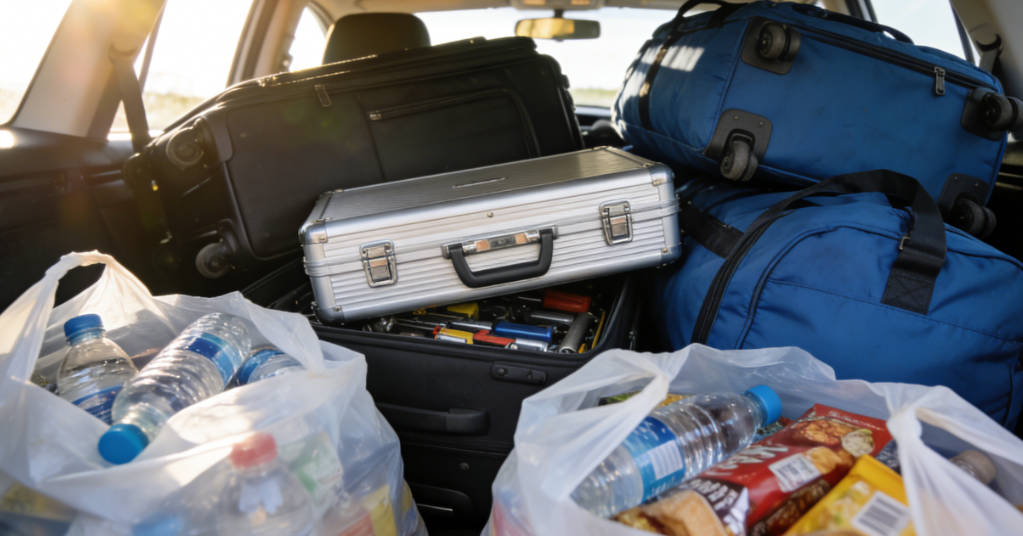
Many common household items can become dangerous when stored in a car trunk. For example, aerosol cans can explode in high temperatures, and medications can lose their effectiveness or become harmful when exposed to heat.

Hazardous materials

Easily Overlooked Safety Hazards

Beyond obviously dangerous items, there are many overlooked hazards when it comes to car trunk storage:

1. Unsecured Heavy Items

Heavy items that aren't properly secured can become dangerous projectiles in the event of a sudden stop or accident. A 20-pound object moving at 50 mph has the force of 1,000 pounds in a collision.

2. Sharp Objects

Tools, sports equipment, and other sharp objects can puncture your trunk lining or cause injury if they shift during driving.

3. Loose Liquids

Even non-toxic liquids can damage your vehicle if they spill. Cleanup can be costly, and the residue can attract pests.

4. Excessive Weight

Overloading your trunk can:

  • Reduce fuel efficiency
  • Damage suspension components
  • Affect braking performance
  • Cause tire wear and blowouts
  • Make your vehicle unstable

5. Valuable Items

While not a direct safety hazard, leaving valuable items in your trunk makes your vehicle a target for theft. Always take valuables with you or store them out of sight.

Unsecured heavy items

Proper Trunk Storage Techniques

To safely store items in your car trunk, follow these best practices:

1. Use Storage Containers

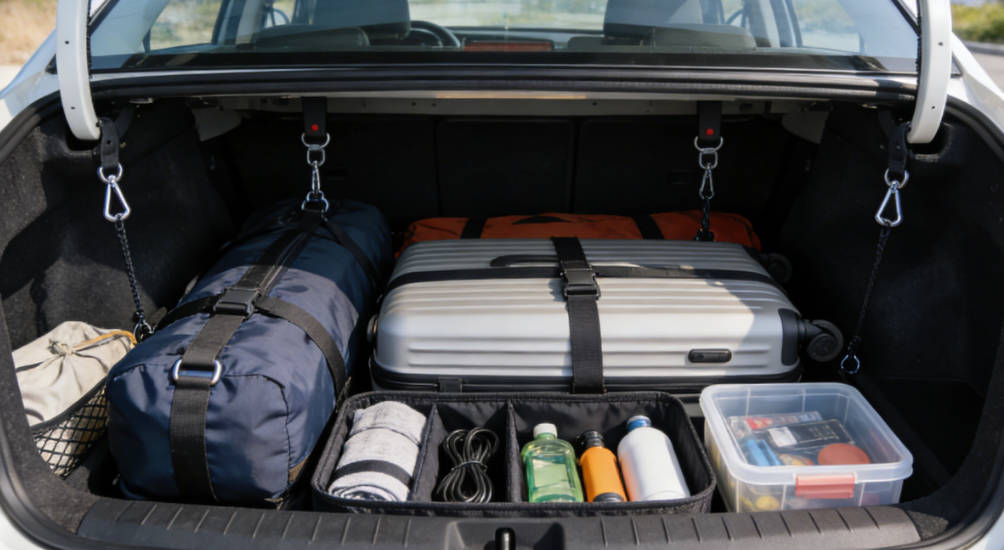
Invest in sturdy plastic storage bins with lids to keep items organized and prevent them from shifting. This also protects your trunk from spills and damage.

2. Secure Heavy Items

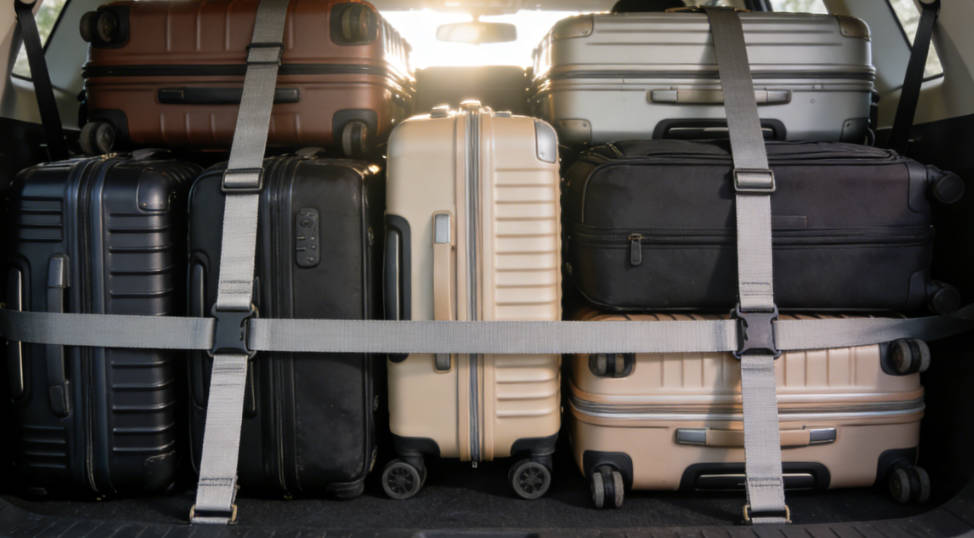
Use cargo nets, bungee cords, or tie-down straps to secure heavy or large items. Many modern vehicles have built-in tie-down points in the trunk.

3. Distribute Weight Evenly

Place heavier items toward the center of the trunk and as close to the back seats as possible. This helps maintain proper weight distribution and vehicle balance.

4. Don't Overload

Check your vehicle's owner's manual for the maximum recommended cargo weight. Exceeding this limit can cause serious damage and safety issues.

5. Keep It Clean

Regularly clean your trunk to remove debris, spills, and potential hazards. A clean trunk is also less likely to attract pests or develop odors.

Pro Tip

Consider installing a trunk organizer or cargo mat to protect your vehicle and make storage more efficient. These accessories are relatively inexpensive and can save you from costly damage.

Properly secured trunk items

Essential Emergency Items to Store

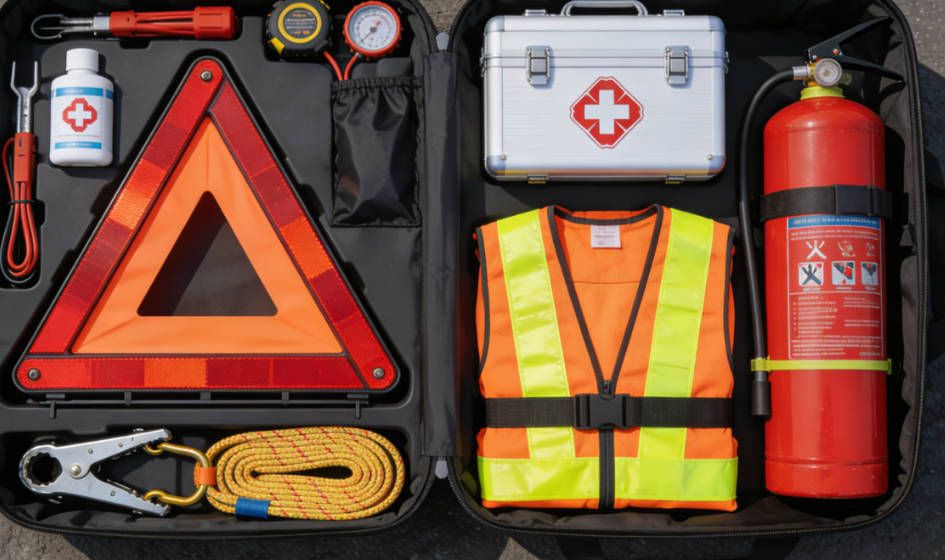
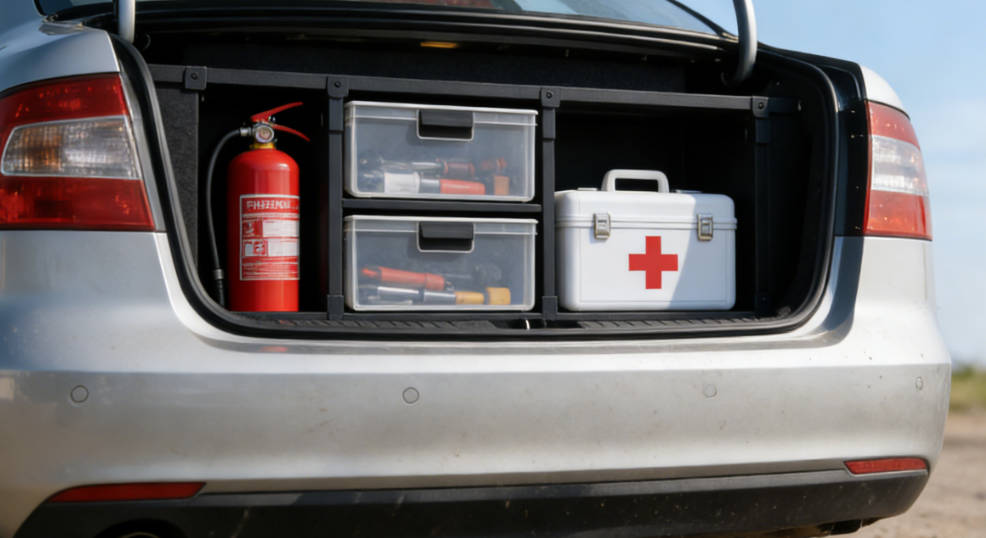
While many items are dangerous to store in your trunk, there are several emergency essentials you should always keep on hand:

  • First aid kit: Basic supplies for treating injuries
  • Spare tire and tools: Jack, lug wrench, and tire iron
  • Jumper cables: For dead batteries
  • Flares or reflective triangles: For roadside visibility
  • Flashlight: With extra batteries
  • Blanket: For warmth in cold weather
  • Water: In sturdy, unbreakable containers
  • Non-perishable snacks: Energy bars or dried fruit
  • Multi-tool: For various repairs
  • Fire extinguisher: Small, portable, and rated for vehicle use
  • Emergency Preparedness

    Check your emergency kit regularly to ensure all items are in good condition and not expired. Replace batteries, food, and water annually.

    Car emergency kit

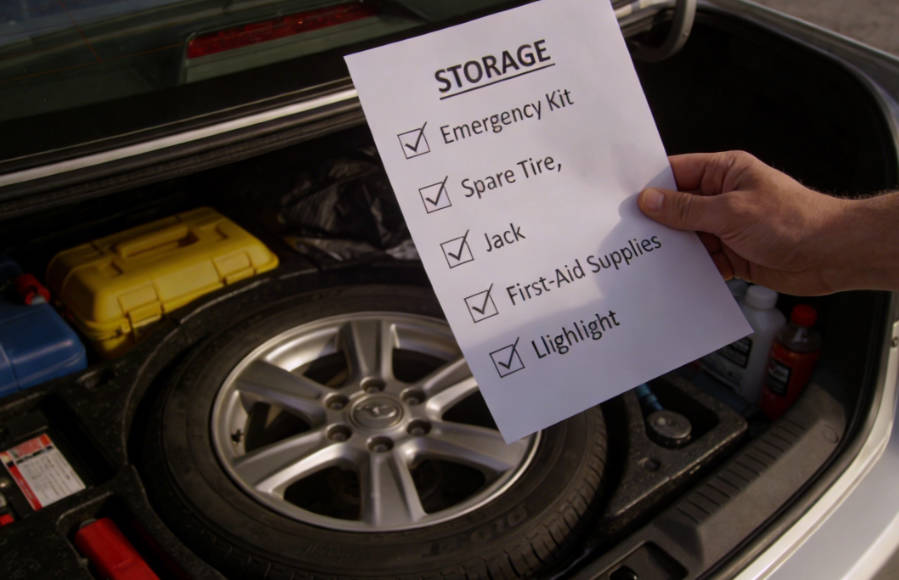
    Proper Storage Checklist

    Use this comprehensive checklist to ensure safe trunk storage:

  • Before storing: Check if the item is safe for car storage
  • Weight limit: Verify you're not exceeding your vehicle's cargo capacity
  • Containers: Use secure, sealed containers for all items
  • Securing: Tie down or secure all heavy items
  • Weight distribution: Place heavy items low and toward the center
  • Hazardous materials: Remove all flammable or dangerous items
  • Perishables: Take food, beverages, and medications with you
  • Valuables: Remove all valuable items or hide them completely
  • Cleanliness: Ensure no spills or debris remain
  • Emergency kit: Verify your emergency supplies are stocked
  • Regular Maintenance

    Make trunk storage safety part of your regular vehicle maintenance routine. Check your trunk organization and contents every time you refuel or wash your car.

    Checking trunk storage checklist

    Frequently Asked Questions

    Is it safe to store a spare gas can in my trunk?

    No. Gasoline is highly flammable and can emit dangerous fumes, especially in the enclosed space of a trunk. If you must carry extra fuel, use an approved container and keep it in the passenger compartment with proper ventilation.

    Can I store batteries in my trunk?

    Car batteries are designed to be in the engine compartment, not the trunk. Other types of batteries (like AA or AAA) can be stored in the trunk if they're in a secure, insulated container. Avoid storing lithium-ion batteries long-term in hot environments.

    How much weight can I safely put in my trunk?

    Check your vehicle's owner's manual for the maximum cargo weight capacity. This is typically between 100-200 pounds for sedans and 500-1000 pounds for SUVs and trucks. Remember to include passengers in your total weight calculation.

    Is it okay to store groceries in the trunk?

    Yes, but only for short periods. Perishable items can spoil quickly in a hot trunk, and loose groceries can roll around and get damaged. Use reusable grocery bags or storage bins to keep items secure.

    Should I store tools in my trunk?

    Small tools can be stored in your trunk if they're in a secure toolbox. Large or sharp tools should be properly secured to prevent them from becoming projectiles in an accident.

    Conclusion

    Your car trunk is a valuable storage space, but it's important to use it safely and responsibly. By knowing what should and shouldn't be stored there, recognizing easily overlooked hazards, and following proper storage techniques, you can keep yourself, your passengers, and your vehicle safe.

    Remember these key takeaways:

    • Avoid storing flammable, hazardous, or perishable items
    • Secure all items to prevent them from becoming projectiles
    • Distribute weight evenly and don't overload
    • Keep essential emergency items on hand
    • Regularly check and maintain your trunk storage

    By following our proper storage checklist, you can enjoy the convenience of trunk storage while minimizing safety risks. Always prioritize safety over convenience when it comes to storing items in your vehicle.

    Final Thought

    Your car is a major investment, and how you use your trunk can impact its performance, safety, and longevity. Take the time to store items properly – it's worth the effort for your safety and peace of mind.

    Safe trunk storage

    Leave a Comment